Knowledge base / Women's hockey
Do Women's Hockey Rules Differ on Equipment and Tape?
Short answer
Not on tape or sticks: every rulebook we checked uses the same stick and tape rules for women and men. The differences are protective gear. The IIHF and the PWHL require full face protection for every woman player, and Hockey Canada names female hockey among the categories where a full face protector is compulsory.
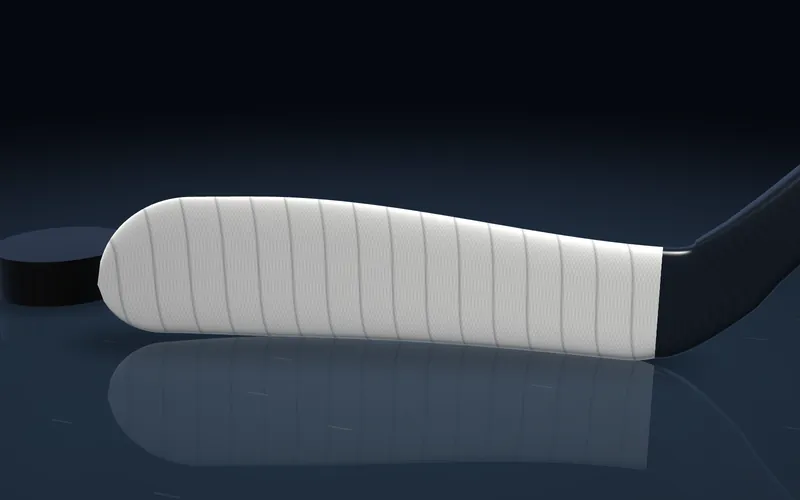
Short answer: tape and stick rules are the same for everyone. Where women’s and girls’ hockey differs is protective equipment, and at the international level, body contact. This article covers only what the current rulebooks say. Your league or association may add local rules.
Tape and sticks: no difference
Every rulebook we checked treats women’s and men’s sticks the same way.
| Rulebook | Tape rule | Player stick length | Women-specific stick rule? |
|---|---|---|---|
| Hockey Canada 2026-28 | Rule 3.3(e): any colour tape | 63 in (1.60 m) | None found |
| USA Hockey 2025-29 | Rule 301(a): adhesive tape of any colour, anywhere | 65 in | None found |
| IIHF 2026/27 | Rule 10.1: adhesive tape of any colour, anywhere | Set in Rule 10 | None |
| PWHL 2025-26 | Rule 10.1: adhesive tape of any colour, anywhere | 63 in | Not applicable (women’s league) |
The goalie knob is the same too. The IIHF (Rule 10.2) and the PWHL (Rule 10.2) both require a knob of white tape or other approved material on a goalie stick, as the NHL does. See goalie stick knob rules.
Hockey Canada (Rule 3.3(d)) and USA Hockey (Rule 301(a)) both require the end of a hollow shaft to be covered, for girls and boys alike. For the full detail, see Hockey Canada and USA Hockey rules on stick tape.
Face protection: the main difference
Hockey Canada
Rule 3.6(e), Note 2, lists a few exceptions, such as visors for Senior and Major Junior players and optional full protection in male adult recreational hockey. It then makes a CSA-certified full facial protector compulsory in all other categories and divisions, and names female hockey specifically.
Rule 3.6(c) also requires a BNQ-certified throat protector for players registered in minor and female hockey.
USA Hockey
Rule 304(d) requires a HECC-certified facemask in all age classifications below Adults. That applies to girls and boys alike. Rule 304(g) requires a neck laceration protector in all classifications except Adults. Rule 304(f) includes the Girls’ 19 and under classification in its mouthpiece rule, which calls for a coloured, non-clear internal mouthpiece.
IIHF
Rule 102.1 requires all players in the women’s Senior category to wear full face protection, either a full visor or a cage, fixed to the helmet. Rule 102.2 does the same for the U18 category. Rule 102.4 requires ear protection on the helmet, and Rule 102.3 recommends a mouthguard.
Team Canada’s guide to Olympic rules notes the contrast: IIHF men over 18 can choose a visor, while women must wear full face protection.
PWHL
Rule 9.7 says all players must wear full face protection, a full visor or a cage, fixed to the helmet. Team Canada’s rules guide adds that this applies regardless of age. The NHL, by comparison, requires visors only for players with fewer than 25 games.
Body contact
This does not involve tape, but it is the other rule difference players ask about.
- IIHF Rule 101.1: in women’s hockey, body checking is allowed only when a player clearly intends to play the puck. Pinning or pushing an opponent into the boards, and stepping or gliding into an opponent, are penalized.
- PWHL: the league says it uses IIHF rules on body checking.
Marta Zawadzka, the IIHF’s chair of officiating, told The Hockey News in 2024 that body checking was never banned in international women’s hockey, only enforced more strictly.
What this means for your tape job
Nothing changes. Tape your blade and knob the same way as any player:
For gear tape, such as holding up socks and shin pads, see clear vs sock tape. And never put tape or stickers over a helmet certification label. See safety notes for parents.
Sources
- Hockey Canada Playing Rules 2026-28 (Hockey Canada) cdn.hockeycanada.ca
- Official Rules of Ice Hockey 2025-29 (USA Hockey) cdn2.sportngin.com
- IIHF Official Rule Book 2026/27 (IIHF) blob.iihf.com
- IIHF Rule Book 2026-27, Rule 101: Women's Hockey Specific Playing Rules (IIHF) test.rulebook.iihf.com
- IIHF Rule Book 2026-27, Rule 102: Women's Hockey Specific Equipment Rules (IIHF) test.rulebook.iihf.com
- PWHL Official Rule Book 2025-26 (PWHL) assets.contentstack.io
- Rules (PWHL) thepwhl.com
- What are the differences between NHL, PWHL, and Olympic hockey rules? (Team Canada, May 2025) olympic.ca
- IIHF Moves Toward Unified Rules With Leagues Like PWHL and SDHL Related To Body Checking (The Hockey News, Apr. 2024) thehockeynews.com