Knowledge base / Lore and culture
Hockey Tape Balls: The Tradition and How to Make One
Short answer
A tape ball is old stick tape wrapped around itself, a layer for every retape, so it grows through a season. To make one, crumple a strip into a tight core, wrap each old tape job around it sticky side in, and turn the ball as you go. The record tape ball weighs 2,000 lb, but it is not hockey tape.
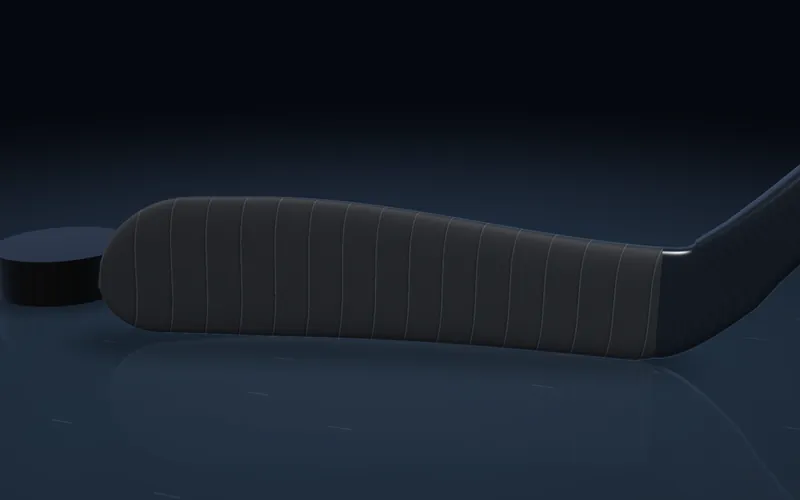
Every retape leaves a strip of used tape in your hand. Most of it goes in the garbage. Some of it goes on a ball.
The tradition
A tape ball is exactly what it sounds like: old tape wrapped around old tape. Each tape job adds a layer, so a ball kept through a season is a rough record of how often you retaped. Our lore page describes kids keeping them for years.
That tradition is widely told, but it lives mostly in dressing rooms and family basements, not in print. We could not find a reliable source documenting a famous hockey tape ball, a team that keeps one, or how the habit started.
Do pros keep them?
We could not confirm it. NHL teams go through a lot of tape: Carolina’s equipment manager said in 2023 that the team plans on one new stick per player per game. But the team features we read say nothing about what happens to the old tape.
Are tape balls used in ball hockey?
Not in organised ball hockey. The International Street and Ball Hockey Federation’s rulebook calls for a primarily orange ball of an approved material, 6.6 to 7 cm across and 60 to 77 g. The Canadian Ball Hockey Association approves specific moulded balls for different temperatures. A tape ball is a toy for the driveway or the basement, not a game ball. More in ball hockey and roller hockey tape.
Build one in 3D
Want to see how big yours would get? Pick Tape ball as the stick type in the Tape Lab, choose your colours and how many rolls, and watch it wind up.
The record
Guinness World Records lists the largest tape ball at 907.18 kg (2,000 lb) with a circumference of 3.89 m (12 ft 9 in). It was made by the Portland Promise Center in Louisville, Kentucky, and measured on May 6, 2011. It is built from mixed tape: duct, electrical, masking, gaffer, packing, foil and athletic tape.
That is not a hockey tape ball. We could not find a documented record for a ball made only of hockey tape, so any “biggest hockey tape ball” claim you see online should be treated as unconfirmed.
What goes into a good one
- Cloth stick tape is the main ingredient. Howies and Lowry both describe their cloth tape as using a natural rubber adhesive, which is what holds the layers together.
- Shin pad tape works too, if you like stripes. Renfrew Pro’s Polyflex is polyethylene and comes in clear and colours, so it adds a smooth, shiny layer.
- Cohesive grip tape is a poor binder. Renfrew Pro says its StretchRap grip sticks mainly to itself, so it will not grab cloth layers well.
- Waxed tape may hold less well, because wax fills the weave of the cloth. We have not tested this; treat it as a guess.
How to make one
- Start the core. Take your first strip of old tape and crumple it into a tight lump, about the size of a marble. Squeeze hard.
- Wrap sticky side in. Lay the next strip over the core with the adhesive against the ball, not facing out. A ball that is sticky outside picks up lint and dirt in your bag.
- Turn the ball as you wrap. Wrap a few centimetres, rotate the ball a quarter turn, and keep going. Wrapping the same line over and over makes an egg, not a ball.
- Pull each strip snug. Firm tension keeps the layers tight and the ball solid.
- Fill the low spots. Roll the ball on a table. If it wobbles, put the next strip over the flat side.
- Finish each session clean. Press the loose end down with your thumb.
- Add a layer every retape. Write the date on a strip of white tape now and then if you want to count back later.
Keep it clean
- Do not use tape that has been on your legs or on a cut. Shin pad and skin tape picks up sweat, and anything near a wound should go in the garbage.
- Let wet blade tape dry before you add it. Damp layers stay soft.
- Store the ball out of a hot car. Heat softens rubber adhesive. See storing tape in heat and cold.
Safety note
Strip old tape with your hands, not a knife against the blade. If you need to cut tape, keep the blade pointed away from you. Our residue guide covers safe removal. A big tape ball is also heavier than it looks. Keep it off high shelves above a bed.
Sources
- Largest tape ball (Guinness World Records) guinnessworldrecords.com
- Renfrew Pro product catalogue (Renfrew Pro) renfrewpro.com
- Pressure-sensitive adhesive (Wikipedia) en.wikipedia.org
- Essential guide to applying stick wax in hockey (Lowry Sports) lowrysports.focuspointsap.com
- White Cloth Hockey Tape (Howies Hockey Tape) howieshockeytape.com
- Hockey Tape (Lowry Sports) lowrysports.focuspointsap.com
- Hockey Shin Pad, Shin Guard and Sock Tape (Renfrew Pro) renfrewpro.com
- ISBHF Rulebook 2026, Rule 250: Ball (International Street and Ball Hockey Federation) isbhf.com
- Equipment (Canadian Ball Hockey Association) canadaballhockey.ca
- Mailbag #69: Equipment talk (Hurricanes.com, Oct. 2023) nhl.com