Do You Tape a Ball Hockey or Roller Hockey Stick?
Short answer
You do not have to. International ball hockey rules allow tape of any colour anywhere on the stick, as long as it is not fluorescent, but nothing requires it. Taping the knob for grip and the blade for protection still makes sense. Check your stick warranty before playing on asphalt or concrete.
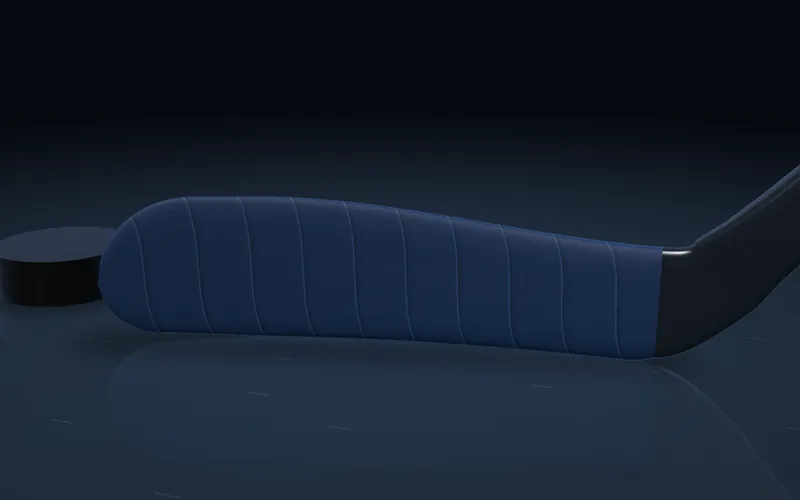
Ice hockey players tape their sticks without thinking about it. Ball hockey and roller hockey players often ask whether they should bother. The short answer: tape is allowed, not required, and the reasons for it are a little different off the ice.
What the rules say
Ball hockey
The International Street and Ball Hockey Federation (ISBHF) sets the international rules, and the IIHF recognises it as the sport’s governing body. Its 2026 rulebook says:
- Tape: adhesive non-fluorescent tape of any colour may be wrapped around the stick at any place (Rule 222). The same applies to goalie sticks (Rule 232).
- Sticks: wood or another approved material such as aluminium or plastic, with no projections and bevelled edges.
- Blade: up to 32 cm long and 5 to 7.5 cm wide. Curve is not limited, but a double curve is dangerous equipment.
- Goalie blade: up to 39 cm long.
Note the one difference from ice hockey: the ISBHF bans fluorescent tape. Ice hockey rules (NHL, IIHF, USA Hockey) allow tape of any colour.
In Canada, the Canadian Ball Hockey Association says standard hockey sticks are used. Check your own league’s rules too.
Roller (inline) hockey
We could not reach a current inline rulebook’s stick-tape clause for this article, so we cannot quote one. For comparison, USA Hockey’s ice rulebook, Rule 301(a), allows adhesive tape of any colour anywhere on the stick. Whether your inline league follows the same wording is unconfirmed. Check its rulebook.
Taped blades are nothing new on wheels. Wikipedia’s inline hockey article describes 1938 footage of roller hockey players using ice hockey sticks with taped blades.
Why tape a ball hockey stick?
Off the ice, the jobs tape does change. This table is our reasoning, not a tested result:
| Job | On ice | Ball hockey / roller |
|---|---|---|
| Grip on the puck or ball | A main reason to tape | Still useful, on a ball or a roller puck |
| Keeping water out | Wax and tape help | Rarely an issue on dry floors |
| Protecting the blade | Helps | Likely matters more on rough surfaces |
| Knob grip | A main reason to tape | The same: your hands still sweat |
That points to a sensible default: tape the knob and handle as normal, and use a lighter blade job, or none if you prefer a bare blade.
Surfaces
Ball hockey is often played on concrete, asphalt or sport court. CBHA says the game started on roadways and parking lots. Inline rinks use plastic tiles, wood or sealed concrete, according to Wikipedia.
Rough surfaces are hard on sticks. Bauer’s warranty page says composite stick coverage is void if the stick has been used on concrete or asphalt. Before you take a new composite stick to the driveway, read your maker’s terms. An older or cheaper stick is the safer choice for outdoor ball hockey.
We could not find a test of how fast cloth tape wears on asphalt or sport court. On ice, Lowry names the bottom edge as one of the spots that wears most. Check it first, and retape when bare blade shows.
Temperature and the ball
Ball hockey balls are matched to the weather. The CBHA lists approved balls for hot (25 °C and up), moderate (15 to 25 °C), cool (0 to 15 °C) and cold (0 °C and below) conditions. Tape behaves the same way in the cold as it does at an outdoor rink: rubber adhesives firm up and lose tack. Tape the stick indoors before a cold game. See storing tape in heat and cold.
A simple setup
- Knob and handle: tape as you would for ice. See knob styles.
- Blade: a mid-blade or toe job is enough for most players. Inline Warehouse notes that less tape saves weight.
- Colour: any colour except fluorescent if you play under ISBHF rules.
- Skip the wax on dry floors unless you like the tack.
Safety note
The ISBHF requires bevelled edges and no projections. Trim tape ends clean so nothing sticks out, and retire a stick with a cracked or splintered blade. Ball hockey is fast, and a broken blade edge is sharp.
Sources
- ISBHF Rulebook 2026, Rules 222, 232 and 250 (International Street and Ball Hockey Federation) isbhf.com
- Equipment (Canadian Ball Hockey Association) canadaballhockey.ca
- What is ball hockey? (Canadian Ball Hockey Association) canadaballhockey.ca
- Street hockey (Wikipedia) en.wikipedia.org
- Inline hockey (Wikipedia) en.wikipedia.org
- Warranty (Bauer) bauer.com
- Popular hockey stick tape jobs (Inline Warehouse) inlinewarehouse.com
- Official Rules of Ice Hockey 2025-29, Rule 301 (USA Hockey) cdn2.sportngin.com
- Essential guide to applying stick wax in hockey (Lowry Sports) lowrysports.focuspointsap.com
- Pressure-sensitive adhesive (Wikipedia) en.wikipedia.org