Knowledge base / Care and gear
Storing Hockey Tape: What Heat and Cold Do to a Roll
Short answer
Keep tape at room temperature, protected from knocks, for example inside your helmet or skate in your bag. Cold makes the adhesive firm and less sticky, and heat makes it soft and gummy. At an outdoor rink, keep the roll in a warm pocket until you tape.
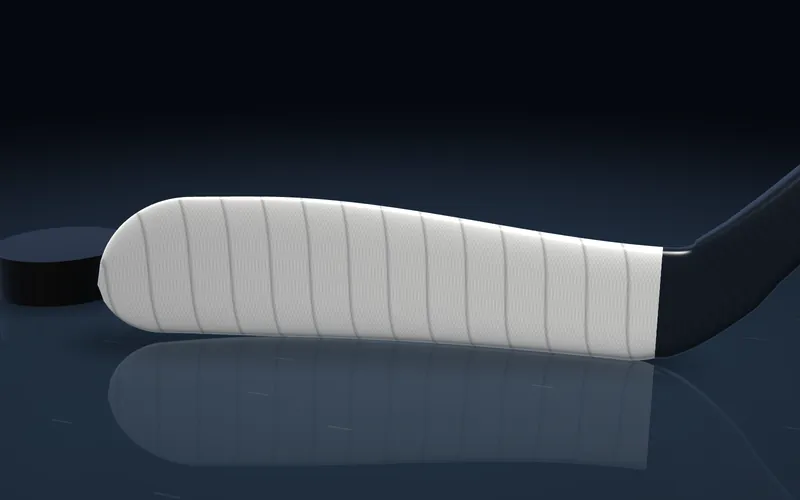
A roll of tape is a strip of cloth wound over a layer of sticky rubber. How you store it changes how well that rubber sticks when you need it.
Why temperature matters
Hockey tape uses a pressure-sensitive adhesive: it sticks when you press it on, without heat or water. Howies and Lowry both describe their cloth tape adhesive as natural rubber.
Pressure-sensitive adhesives are made to work at room temperature. Wikipedia’s article on them notes that standard tape tests are run at 23 °C and 50 percent humidity. Away from that, they change:
| Condition | What happens to the adhesive | What you notice |
|---|---|---|
| Cold | Firms up and loses tack | Tape lifts at the toe, edges will not lie flat |
| Room temperature | Works as designed | Tape sticks and stays |
| Heat | Softens and holds less | Gummy roll, tape slides, more residue |
Wikipedia says cold can make an adhesive too firm to stick and can cause it to let go early, and that heat softens an adhesive and reduces its holding power. Bostik’s residue advice uses the same effect on purpose: warm residue to loosen it.
No tape maker we checked (Renfrew Pro, Howies, Lowry, North American Tapes) publishes a storage temperature or a shelf life for hockey tape. So the advice below is based on how these adhesives behave, not on a maker’s spec.
Where to keep it
In your bag
North American Tapes suggests keeping cloth tape inside your helmet or skate boot so it does not get beaten up in the bag. It explains why: a hard knock to the side of a roll can squeeze the adhesive layers together, which can make edge threads break later. It also sells a case that holds three rolls.
Other tips:
- Keep rolls in a bag or case so the edges stay clean.
- Keep wax in its tin. Howies says its tin stops the wax rubbing off on the rest of your gear, and that includes your tape.
- Dry your bag. Damp gear and damp tape do not mix. Lowry’s wax guide says wet tape adds weight and loses control.
In the car
Do not leave tape in a hot car in summer. Heat softens the adhesive and the roll can go gummy. In winter a car gets cold enough to stiffen the adhesive. Bring the bag inside.
At home
A closet or shelf at room temperature is ideal. Avoid a hot attic, a sunny window ledge or a cold garage.
Taping at a cold rink
Outdoor rinks and cold arenas are where storage shows.
- Keep the roll warm. Carry it in an inside pocket until you tape, not in the bag on the bench.
- Tape indoors if you can. A warm dressing room or car beats the boards at -15 °C.
- Press every wrap. Rub each pass flat with your thumb, especially the toe and bottom edge, where tape lifts first.
- Wax after. Wax keeps snow and water out of the weave. See stick wax.
For playing in the wet, see tape on wet and outdoor ice.
Shin pad tape
Shin pad tape is a different material. Renfrew Pro describes its Polyflex as moisture-resistant polyethylene with elasticity and memory. We could not find temperature guidance for it either. Treat it the same way: room temperature, out of the sun, and not crushed.
How to tell a roll has gone bad
We could not find a maker’s test for this, so these are signs, not rules:
- The edges are frayed or threads pull out as you unwind. That fits North American Tapes’ warning about knocked rolls.
- The adhesive feels dry and the tape will not grab a clean blade at room temperature.
- The roll is gummy and stringy, or the layers fuse.
If a roll fails on a clean, dry blade at room temperature, retire it. Tape is cheap. A tape job that peels in the second period is not.
Safety note
Do not warm a cold roll with a lighter or a heat gun. A warm pocket is enough. See heat guns, lighters and wax safety.
Sources
- Tips and tricks (North American Tapes) northamericantapes.com
- Pressure-sensitive adhesive (Wikipedia) en.wikipedia.org
- White Cloth Hockey Tape (Howies Hockey Tape) howieshockeytape.com
- Hockey Tape (Lowry Sports) lowrysports.focuspointsap.com
- How to remove sticky tape residue? (Bostik) diy.bostik.com
- Hockey Shin Pad, Shin Guard and Sock Tape (Renfrew Pro) renfrewpro.com
- Howies Hockey Stick Wax (Howies Hockey Tape) howieshockeytape.com
- Essential guide to applying stick wax in hockey (Lowry Sports) lowrysports.focuspointsap.com